When planning a new office, restaurant or store, one of the first decisions is how to buy the project. Do you appoint one company to handle everything, or hire a designer, then a contractor, then separate specialists? Both routes can work. The right choice depends on your timeline, how much time your team can give the project, and how much risk you are willing to manage.
What is a turnkey fit-out?
In a turnkey (design and build) fit-out, one company takes responsibility for the whole project: design, approvals, MEP, joinery, finishes, furniture and handover. You deal with one team and one contract, and receive a space that is ready to use. Read more about our turnkey fit-out service.
What does hiring separate contractors look like?
In the traditional route, you appoint an interior designer first. Once the design is complete, contractors are invited to tender, and the main contractor may bring in separate specialists for MEP, joinery, metal works and finishes. Your team, or a project manager you appoint, coordinates between them.
How the two routes compare
Single point of responsibility. With turnkey, one company is accountable for design, cost and delivery. With separate contractors, responsibility is split, and disputes about who caused a problem are more common.
Speed. Turnkey projects can overlap design, approvals and early procurement, which usually shortens the overall programme. The traditional route runs in sequence: design, then tender, then build.
Design control. Hiring your own designer gives you a direct relationship with the creative lead. In a good design and build company, you still work closely with the design team, and you can also bring your own designer’s drawings for the contractor to build.
Cost certainty. With turnkey, design decisions are made with buildability and budget in mind from the start. In the traditional route, tender prices sometimes reveal that the design needs to be value-engineered, which costs time.
Coordination effort. Separate contractors require more management from your side. Turnkey removes most of that coordination.
When separate contractors make sense
- You already have a designer you trust and want full independent design control.
- Your organisation has an experienced project management team.
- The project has a long lead time, so a sequential process is not a problem.
When turnkey makes sense
- You have a fixed opening or move-in date.
- Your team needs to stay focused on running the business.
- You want one contract, one point of contact and clear accountability.
- The project involves complex MEP, bespoke joinery or detailed finishes that need tight coordination.
The advantage of in-house teams
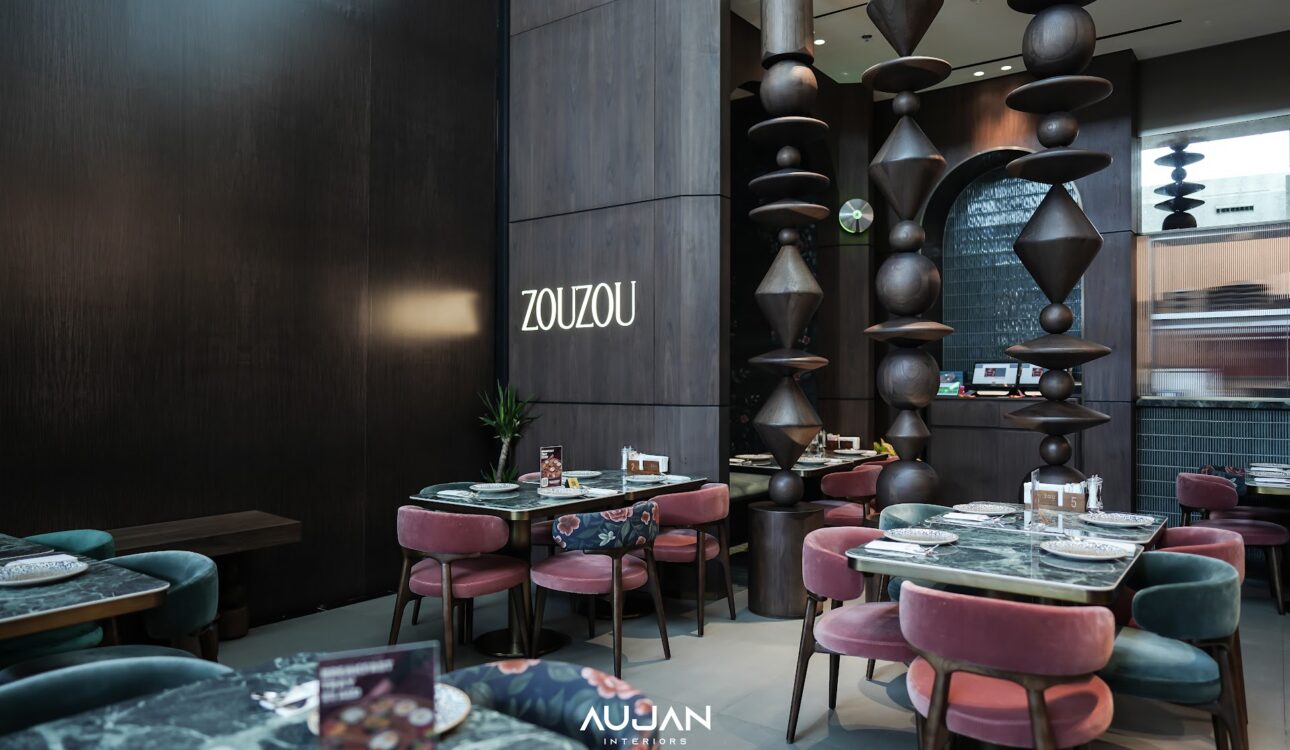
Turnkey works best when the contractor actually delivers the key trades themselves. At Aujan Interiors, MEP, joinery, metal works, upholstery and decorative painting are handled by our own teams, so quality and timelines stay under one roof. You can see the results in our office, restaurant and retail projects.
Not sure which route suits your project? Request a quote and we will talk you through the options.