
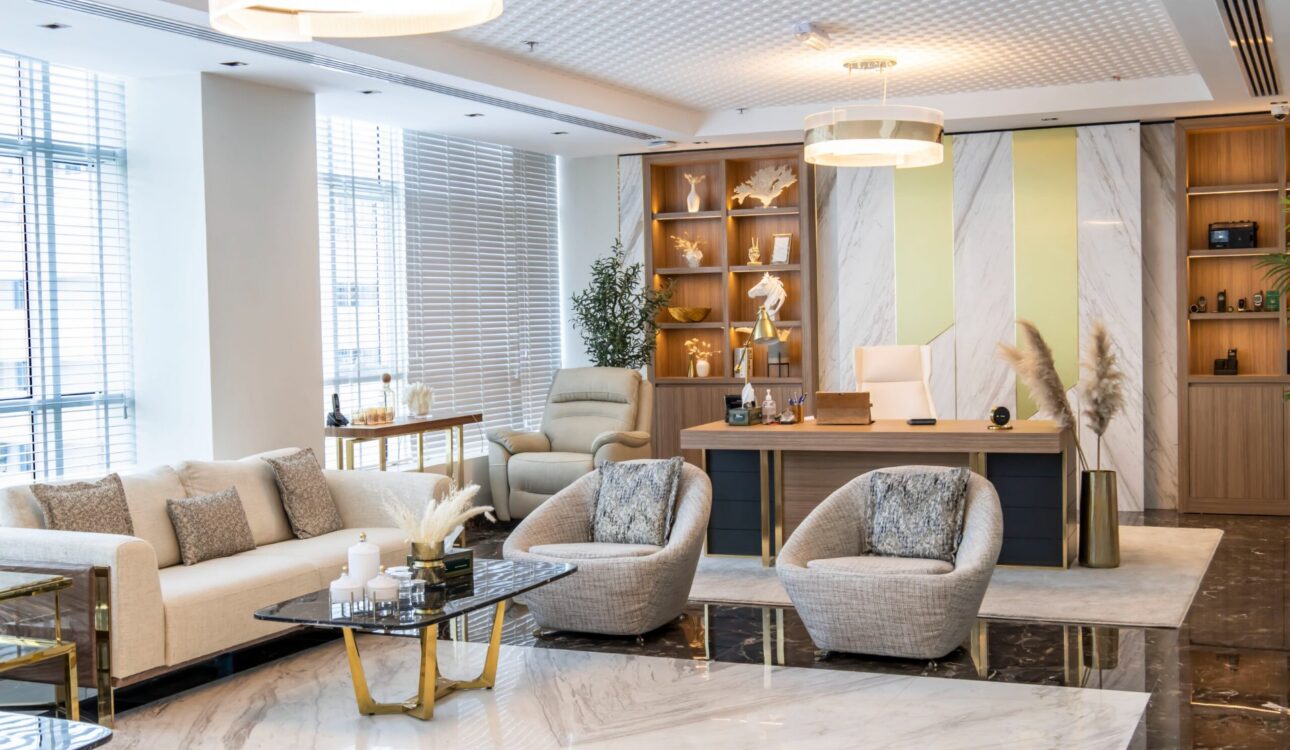
A well-planned office fit-out can transform how your team works, how clients see your brand and how efficiently you use your space. In the UAE, though, an office fit-out involves more than design and construction: landlord approvals, authority permits and building rules all shape the timeline. This step-by-step guide explains the office fit-out process in Dubai and the UAE, from the first brief to moving in.
Step 1: Define your brief and budget
Start with how your team works today and how it will grow over the next few years. Useful questions include:
- How many workstations, meeting rooms and private offices do you need?
- Do you need a reception, pantry, phone booths, a server room or storage?
- What image should the office give clients and new hires?
- What is your total budget, including furniture, IT and moving costs?
- When does your lease start, and when do you need to move in?
A clear brief helps your fit-out partner give accurate advice from day one.
Step 2: Review the space before you sign the lease
Before committing to a unit, ask your fit-out contractor to visit it with you. They can check ceiling heights, existing air-conditioning, power capacity, fire systems and whether the unit is shell and core or already fitted. This helps you avoid costly surprises and negotiate fit-out periods or landlord contributions with the right information.
Step 3: Space planning and concept design
The designer prepares space plans showing how desks, rooms and circulation fit the floor plate, followed by a concept with materials, colours, lighting and furniture. This is where your brand identity comes in. Our article on how interior fit-out enhances branding in commercial spaces explains how to make your office feel like your company.
Step 4: Detailed design and quotation
Once the concept is approved, the team produces detailed drawings for partitions, ceilings, joinery, MEP, lighting and fire systems, then prepares an itemised quotation. Reviewing the quotation line by line is the best way to adjust scope and finishes while protecting what matters most.
Step 5: Authority and landlord approvals
Office fit-outs in the UAE usually need several approvals before work can start:
- Landlord or developer NOC, normally based on your trade licence, tenancy contract (Ejari in Dubai) and design drawings
- Dubai Municipality for mainland Dubai, or the relevant free zone authority such as Dubai Development Authority, DMCC or Trakhees
- Civil Defence approval for fire alarm, sprinklers and emergency lighting
- DEWA approval if the office needs extra electrical load
Other emirates have their own municipalities and civil defence authorities. An experienced fit-out contractor prepares and follows up these submissions for you.
Step 6: Construction on site
With approvals in place, the build begins: partitions and ceilings, MEP works, flooring, joinery, glazing, lighting and finishes. Most commercial buildings have rules on working hours, noise and deliveries, so good site management is important. Regular progress meetings and site visits keep you informed and allow quick decisions. Read more about why MEP works are critical in any fit-out project.
Step 7: Inspections, snagging and handover
Before you move in, the authorities and the landlord inspect the works, and a completion certificate is issued where required. The contractor and your team walk the space together to list any snags, which are fixed before handover. You should receive as-built drawings, warranties and operation manuals for the installed systems.
Step 8: Move in and aftercare
Furniture, IT and audio-visual systems are installed, and your team moves in. A good fit-out partner stays available after handover for maintenance, small changes and future expansion.
How long does an office fit-out take in the UAE?
The timeline depends on the size of the office, the scope of works and the approval route. Small, straightforward offices move faster, while larger floors with new MEP, glass partitions and custom joinery take longer. Approvals can add extra weeks, especially where additional power or special systems are needed, so start the process as early as possible.
Office fit-outs by Aujan Interiors
Aujan Interiors has delivered office fit-outs across the UAE, including Capital.com (12,000 sq.ft), Dhalal (5,367 sq.ft), UAE Barq in Muwailah, Sharjah (6,458 sq.ft) and IFZA (2,000 sq.ft). As a design and build company with in-house joinery and MEP teams, we manage everything from space planning and approvals to construction and handover. See more of our commercial projects.
Frequently asked questions
What is the difference between design and build and traditional fit-out?
With design and build, one company handles design, approvals and construction under one contract. With the traditional route, you hire a designer first and then tender the works to contractors. Design and build is usually faster and gives you one point of responsibility.
Do I need approval to fit out an office in a free zone?
Yes. Free zones such as those managed by Dubai Development Authority, DMCC or Trakhees have their own fit-out approval process, in addition to the building landlord’s requirements.
Can I stay in my current office during a refurbishment?
Sometimes. Phased works, night shifts or temporary relocation within the floor can keep your business running, but they need careful planning with your contractor.
Plan your office fit-out
Whether you are moving into a new office or refreshing your current one, our team can help you plan the right space within your budget. Request a quote and we will call you within one working day.